Trail conditions change almost everything about how a buggy safari feels — but not whether you can ride. Dry tracks give you dust, long sightlines and a fast, floaty ride; wet tracks give you mud, spray and a slower, grippier, far messier one. Both run on the same route, with the same briefing, the same practice lap and the same guide setting the pace at the front of the convoy.
In the Taurus foothills behind Side, Manavgat and Belek, the same forest track can be a pale dust corridor one week and a dark, tacky mud run the next. Understanding the difference is mostly about knowing what to wear and what to expect out on the trail — the buggy itself, a two-seat side-by-side with a steel roll cage, seatbelts, a car-style steering wheel and simple pedal controls, handles both.
Dry, dusty tracks: fast, bright and powdery
On dry days the surface is loose and powdery on top of packed ground. The buggy feels light and quick, the steering is easy, and the trail opens up ahead of you. The trade-off is dust. Every vehicle in front throws up a cloud, so the guide spaces the convoy out and you learn very quickly why goggles are handed out with the helmet.
What dry conditions are like to drive and to sit in:
- Driver: light, responsive steering; the back end can slide gently on loose gravel, which is easy to manage at convoy pace.
- Passenger: the more exposed seat for dust — keep goggles on and mouth closed, or use a buff/bandana.
- Clothes: you finish coated in fine dust rather than soaked. It brushes off, but it gets into everything.
- Photos: golden-hour sessions are spectacular, with backlit dust hanging over the trail.
Wet and muddy tracks: slower, heavier, and the ones people remember
After rain the powder becomes clay-like mud. The buggy feels heavier and more planted, but with less bite: it slides earlier and takes longer to change direction. This is exactly why guides drop the pace. You are not trying to be quick in mud — you are trying to keep a steady line and let the vehicle work.
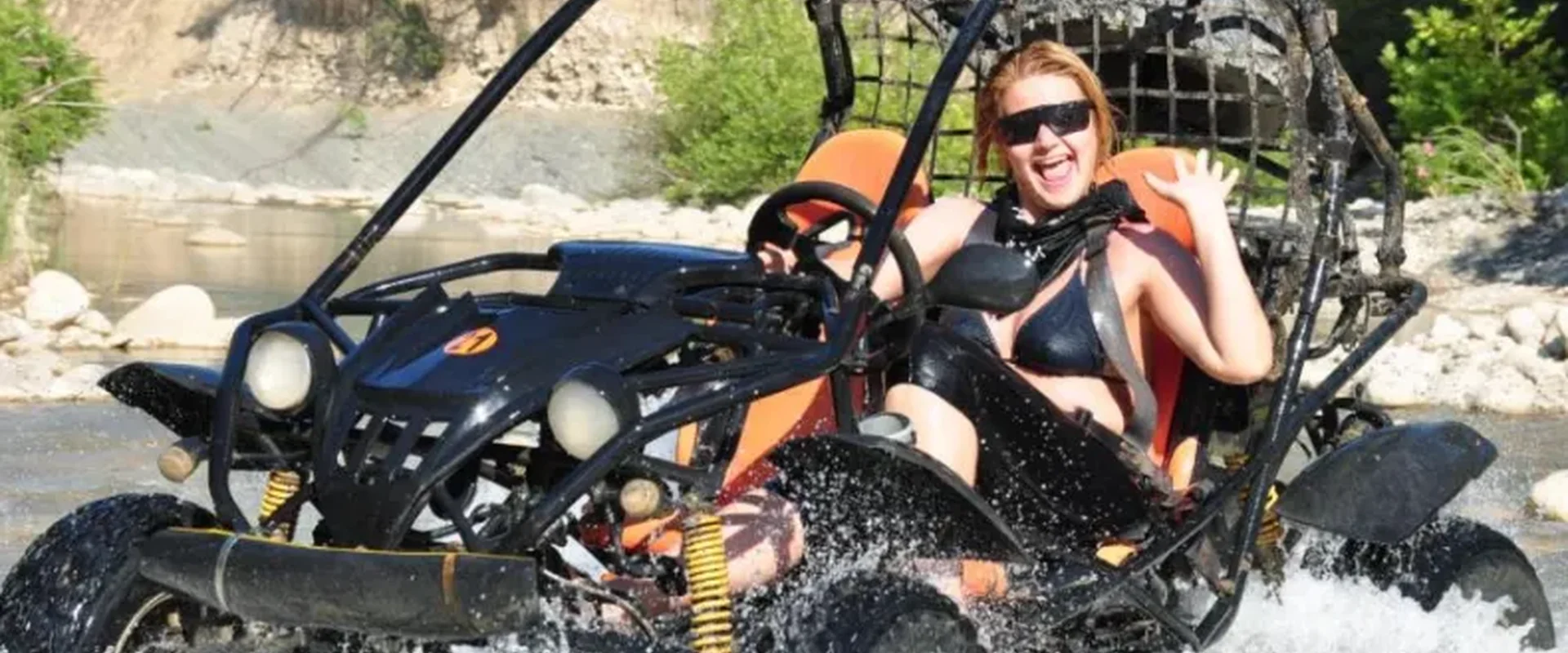
Mud is also the part most people come back grinning about. Wheels throw thick sprays sideways, ruts fill with brown water, and by the halfway stop the whole convoy looks identical under a coat of it. In an open-sided buggy with a roll cage above you, you will get splashed — that is the point, not a fault.
Shallow water crossings
Some sections of the route include shallow river and stream crossings. They are taken slowly and in single file, with the guide going first and reading the depth and the exit line before waving the group through. The instruction is simple and always the same: steady throttle, no sudden steering, follow the wheel tracks of the buggy ahead. Expect water and spray over the sides and floor. Anything you cannot afford to get wet should not be loose in the footwell.
What to wear and bring for each
- Always: closed shoes you do not mind ruining, clothes you would happily throw in a wash, and a change of clothes plus a towel left on the transfer vehicle.
- Dry days: a light long-sleeve top and a buff or scarf for the face; sunglasses are useless under goggles, so bring a case.
- Wet days: quick-drying layers rather than cotton or denim, which stay heavy and cold once soaked.
- Phones and cameras: a waterproof pouch or a zipped pocket. Loose phones in an open buggy do not survive mud or water crossings.
- Skip: white anything, flip-flops, and jewellery.
Helmets and goggles are provided, along with a full safety briefing and a practice lap before the convoy departs, and accident insurance is included.
How the guide adjusts the day
Professional off-road guides lead every convoy and set the pace to the group, not to the fastest driver in it. In dust that means wider gaps and clearer sightlines; in mud it means slower corners, single file through crossings and stopping to help anyone who gets bogged. Because no driving licence and no experience are required — the driver simply needs to be an adult and confident behind the wheel — the guide's job is to make one route work for a mixed group. Anyone who would rather not drive rides as passenger for the same money, which is a genuinely good call on a heavy mud day.
Buggy or quad in mixed conditions?
An honest note: a quad puts you fully exposed and takes the mud head-on, while the buggy's steel roll cage, seatbelts and shared cab keep two people together and slightly more sheltered. If you want a partner, friend or child alongside you (child age is confirmed at booking), the buggy is the practical choice in any weather.
Rain or shine, dust or mud, the day runs the same way: reserve free online, pay the guide on the tour day in cash or by card, with free door-to-door hotel transfer from Side, Manavgat, Boğazkent, Belek, Alanya, Kemer and the surrounding resorts. Not sure what the trails are doing this week? Message us on WhatsApp, 24/7, and we will tell you honestly what to pack.